7 Grocery Store Habits That Are Quietly Straining Your Knees Every Single Trip
Quick Answer: Everyday grocery habits — twisting to load a trunk, carrying uneven heavy bags on one side, squatting incorrectly for low shelf items, and standing in long checkout lines with locked knees — add up to real, avoidable knee strain over time, even though none of it feels like a workout in the moment.
A grocery run seems like the last place knee pain would come from. But the twisting, lifting, and standing patterns packed into a routine trip quietly load the joint in ways that add up.

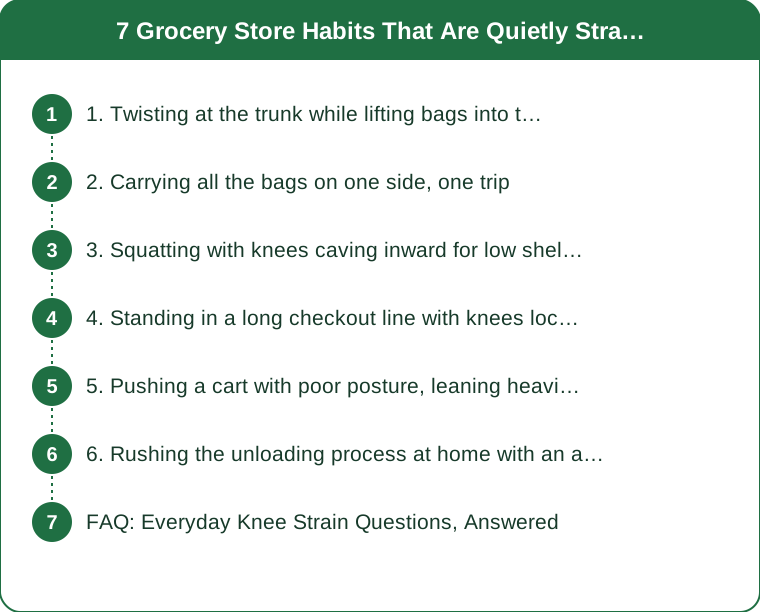
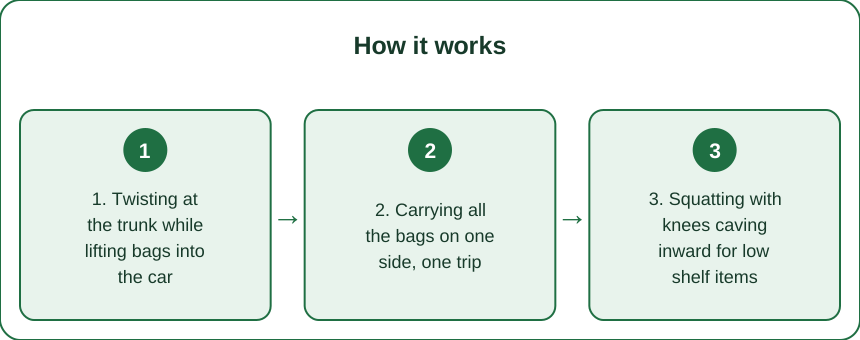
1. Twisting at the trunk while lifting bags into the car
Rotating the torso while the feet stay planted and a load is in your hands puts significant shear stress on the knee — turning the whole body, feet included, toward the trunk before lifting removes most of that twisting load.
2. Carrying all the bags on one side, one trip
An uneven, heavy load on one side shifts your gait and stance asymmetrically, which over a full trip’s worth of repeated trips can add cumulative strain to one knee more than the other — splitting weight across both hands, or making an extra trip, keeps loading more even.
3. Squatting with knees caving inward for low shelf items
Reaching for a low item with knees collapsing inward (rather than tracking over the toes) is a common, easily corrected form issue that adds unnecessary stress to the inner knee — a quick mental check on knee alignment before bending down goes a long way.

4. Standing in a long checkout line with knees locked straight
Locking the knees fully straight while standing still for an extended period reduces blood flow and increases joint compression compared to a soft, slightly bent stance — a small, relaxed bend in the knees during a long wait is easier on the joint.
5. Pushing a cart with poor posture, leaning heavily forward
Leaning far forward into a cart shifts more load onto the front of the knees and lower back with every push — keeping a more upright posture and pushing from a slightly bent-knee stance distributes the effort more evenly.
6. Rushing the unloading process at home with an armful of heavy bags
Carrying more than is comfortable in one trip to ‘save time’ often means faster, less controlled movement through doorways and up steps, exactly the conditions where a knee is more likely to twist awkwardly — a couple of extra trips genuinely reduces this risk.
7. Sitting in the car for a long drive right before or after a heavy-lifting shopping trip
A long stretch of seated stillness right before or after knee-loading activity means the joint goes from static to loaded (or loaded to static) without a warm-up or cool-down transition — a short walk before unloading, or a few minutes of gentle movement after, helps the knee handle that transition better.
FAQ: Everyday Knee Strain Questions, Answered
Are these small habits actually significant enough to cause real knee pain over time?
Individually minor, but cumulative — repeated small strain patterns across daily errands and chores are a well-recognized contributor to overuse-type knee discomfort, distinct from a single acute injury.
Is a reusable cart or trolley worth using instead of carrying bags by hand?
Yes, generally — a wheeled cart or trolley for grocery unloading removes most of the uneven-carrying and twisting load described above, making it a genuinely useful low-cost fix.
Should someone with existing knee pain avoid grocery shopping tasks entirely?
Not necessary in most cases — the goal is adjusting the specific habits above, not avoiding the task, since the underlying movement (walking, light lifting) is generally fine and even beneficial when done with better mechanics.
TL;DR:
- Twisting at the trunk while loading a car adds unnecessary shear stress to the knee
- Carrying uneven, one-sided loads creates cumulative asymmetric strain over repeated trips
- Locked-knee standing in checkout lines and knee-cave squatting for low shelves are both easily corrected
- A wheeled cart for unloading and a brief movement transition before or after heavy lifting both help
None of these habits look like exercise, but small corrections across a routine grocery trip add up to real, avoidable knee relief over time.
Keep Reading
This article is for general informational purposes only and is not medical advice. Always consult a qualified health professional for guidance specific to you.