7 Knee Pain Mistakes Active Women Make Without Realizing It
Quick Answer: Most exercise-related knee pain in active women traces back to a handful of repeatable mistakes — weak glutes, skipped warm-ups, poor squat tracking, worn-out shoes, sudden mileage jumps, ignoring early pain signals, and neglecting single-leg strength — fixing even 2-3 of these often resolves nagging knee discomfort.
Knee pain rarely comes from one dramatic event — it’s usually the slow accumulation of these seven habits.

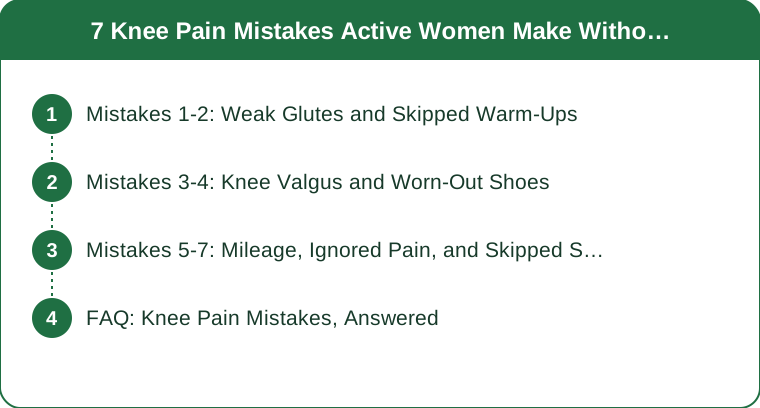
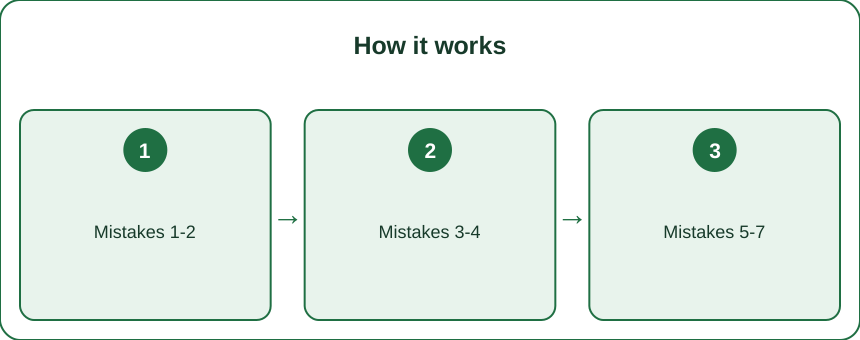
Mistakes 1-2: Weak Glutes and Skipped Warm-Ups
Mistake 1: Weak glutes doing the knee’s job
When glute muscles are underactive, the knee absorbs more rotational and lateral force during squats, lunges, and running than it’s built to handle. This shows up as inner or outer knee pain that glute-strengthening work often resolves within a few weeks.
Mistake 2: Skipping the warm-up on lower-body days
Cold, unactivated muscles around the knee provide less dynamic support during the first several reps of a session — exactly when many knee tweaks happen. 5-10 minutes of dynamic movement before loading the knee meaningfully reduces this risk.
Mistakes 3-4: Knee Valgus and Worn-Out Shoes
Mistake 3: Letting knees cave inward during squats
Known as knee valgus, this inward collapse during squats and lunges places uneven stress on the knee’s supporting structures. It’s most often a hip strength and awareness issue, not a knee problem itself, and is fixable with cueing and glute medius work.
Mistake 4: Training in worn-out shoes
Shoes that have lost cushioning and structural support change how force travels up through your ankle and knee with every step. Replacing shoes every 300-500 miles or at the first sign of visible sole wear prevents this compounding issue.

Mistakes 5-7: Mileage, Ignored Pain, and Skipped Single-Leg Work
Mistake 5: Increasing running mileage too fast
Jumping mileage by more than roughly 10% per week is one of the most consistent predictors of overuse knee injuries in runners. The knee needs gradual loading to adapt tissue strength, not a sudden jump in demand.
Mistake 6: Ignoring early, mild knee discomfort
Minor knee twinges that get pushed through rather than addressed often escalate into real problems within weeks. Mild pain that doesn’t resolve within a few days of rest is worth adjusting training for, not ignoring.
Mistake 7: Skipping single-leg strength work
Most sports and daily movement are single-leg dominant, but most training programs are bilateral by default. Single-leg exercises (step-ups, single-leg deadlifts, lunges) build the stability that bilateral squats alone don’t fully develop.
FAQ: Knee Pain Mistakes, Answered
Which of these 7 mistakes matters most to fix first?
Weak glutes and knee valgus tend to have the biggest combined impact — addressing hip and glute strength often improves several of the other issues indirectly.
How do I know if my knee pain needs a doctor instead of just fixing these habits?
Swelling, instability, sharp or sudden pain, or pain that doesn’t improve after a couple of weeks of addressing these mistakes are all signs to see a professional.
Can I fix knee pain without stopping my workouts entirely?
Often yes — most of these fixes involve modifying, not eliminating, training, though a short reduction in intensity while addressing the root cause is common.
TL;DR:
- Weak glutes, cold warm-ups, and knee valgus are the most common root causes
- Worn shoes and mileage jumped too fast both add compounding, avoidable stress
- Ignoring early mild pain lets small issues become real problems
- Single-leg strength work covers a gap that bilateral training alone leaves open
This is general information, not medical advice — persistent, swelling, or sharp knee pain deserves a professional evaluation.
Keep Reading
This article is for general informational purposes only and is not medical advice. Always consult a qualified health professional for guidance specific to you.