7 Shoe Habits That Are Quietly Straining Your Knees
Quick Answer: Worn-out cushioning, wearing the same shoes for every activity, ignoring arch support needs, and ill-timed shoe replacement are among the most common shoe-related contributors to knee strain — all separate from workout form itself.
Knee pain investigations usually start with squat depth or running form. Footwear is checked far less often, even though these seven habits can load the knees in ways form corrections won’t fix.

Habit 1: Running the Same Shoes Well Past Their Lifespan
Most running shoes lose meaningful cushioning and stability by 300-500 miles, well before they look visibly worn out. Compressed cushioning transfers more impact force directly to the knees with every stride.
Habit 2: Using Running Shoes for Lateral Movement Workouts
Running shoes are built for forward motion and offer minimal side-to-side stability — using them for classes with lateral movement (like some HIIT or dance formats) can let the knee track inward under load without the support it needs.
Habit 3: Ignoring Your Actual Arch Type
A flat, neutral, or high arch changes how force travels up the leg, and a shoe built for the wrong arch type can let the knee absorb rotational stress that proper arch support would redirect.
Habit 4: Wearing Worn Heels Unevenly
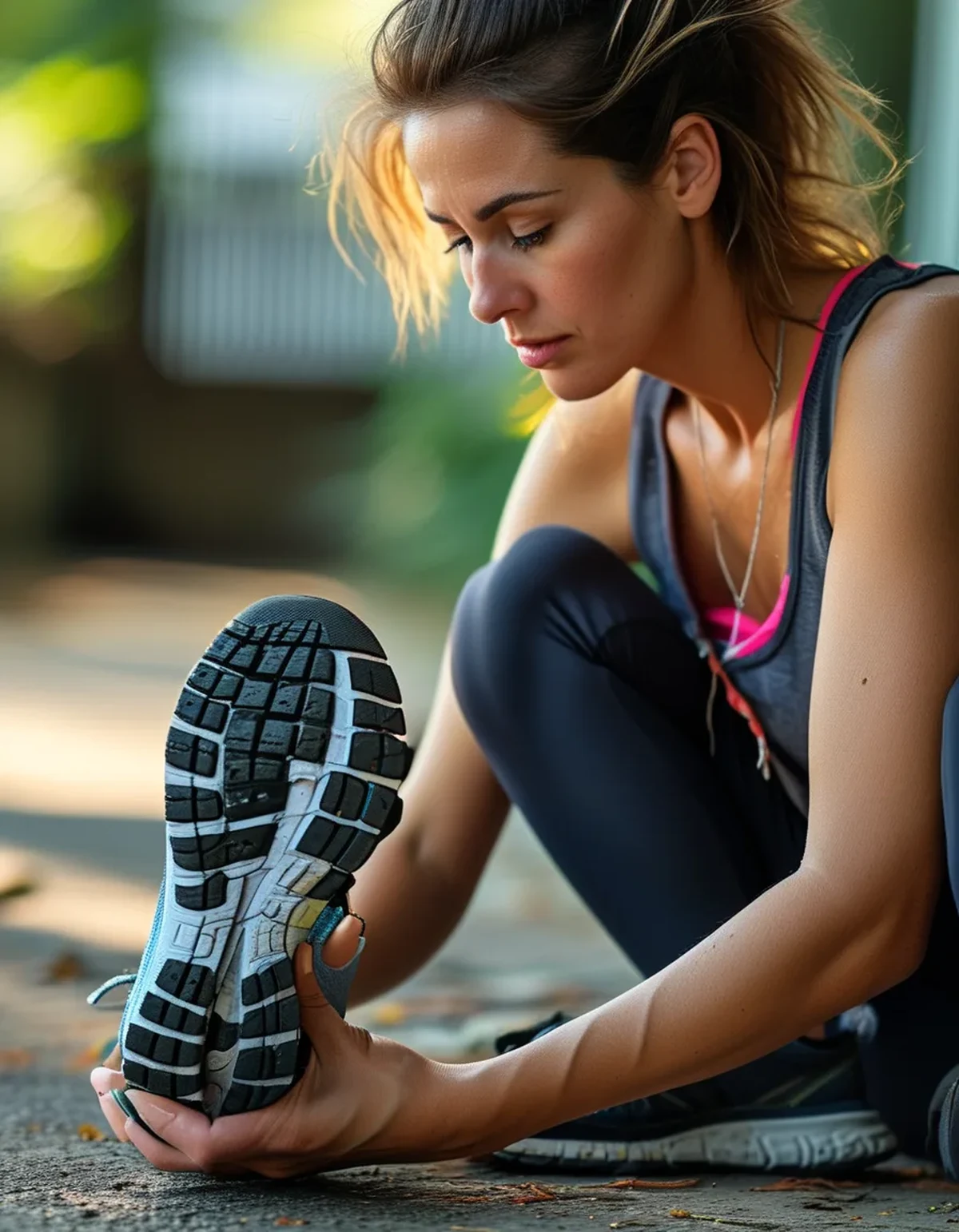
Uneven outsole wear (common with a slight pronation or supination pattern) tilts the foot slightly with every step, which changes knee alignment cumulatively over thousands of steps a day, even if it feels unnoticeable.
Habit 5: Skipping Shoes Entirely for High-Impact Home Workouts
Barefoot training has real benefits for some strength work, but for higher-impact cardio on hard floors, skipping shoes removes cushioning the knees may rely on, especially for anyone already managing knee sensitivity.
Habit 6: Switching Shoe Types Too Abruptly
Jumping straight from a heavily cushioned shoe to a minimalist one (or vice versa) changes how much shock reaches the knee overnight — a gradual transition over several weeks lets connective tissue adapt.

FAQ: Shoes and Knee Health, Answered
How do I know if my shoes need replacing?
Beyond mileage tracking, a simple test is pressing your thumb into the midsole — if it barely compresses compared to a new pair, cushioning has likely broken down.
Do more cushioned shoes always protect the knees better?
Not necessarily — very soft cushioning can reduce stability and proprioception for some activities, so the right amount of cushioning depends on the activity, not just ‘more is better.‘
Should I see a specialist about shoe fit if I have ongoing knee pain?
A podiatrist or running-specialty store gait analysis can identify specific fit and alignment issues that a general shoe swap might miss, especially for persistent or one-sided knee pain.
TL;DR:
- Cushioning breaks down well before shoes look worn — track mileage, not just appearance
- Match shoe type to the activity, especially for lateral-movement workouts
- Uneven wear patterns gradually shift knee alignment over time
- Transition between cushioning levels gradually, not overnight
This is general information, not medical advice — persistent or worsening knee pain deserves a proper evaluation.
Keep Reading
This article is for general informational purposes only and is not medical advice. Always consult a qualified health professional for guidance specific to you.