7 Signs Your Knee Pain Needs a Doctor's Visit, Not Just Rest and Ice
Quick Answer: Swelling that doesn’t reduce within 2-3 days, a knee that gives way or locks, pain waking you at night, and any pain following a specific twisting injury are all signs worth a doctor’s visit rather than continued home rest. Most everyday knee soreness doesn’t include these red flags.
You’ve been icing, resting, and giving it time, but something about this particular knee pain feels different from the usual post-workout ache. Here are 7 specific signs that mean it’s genuinely time to get it looked at.

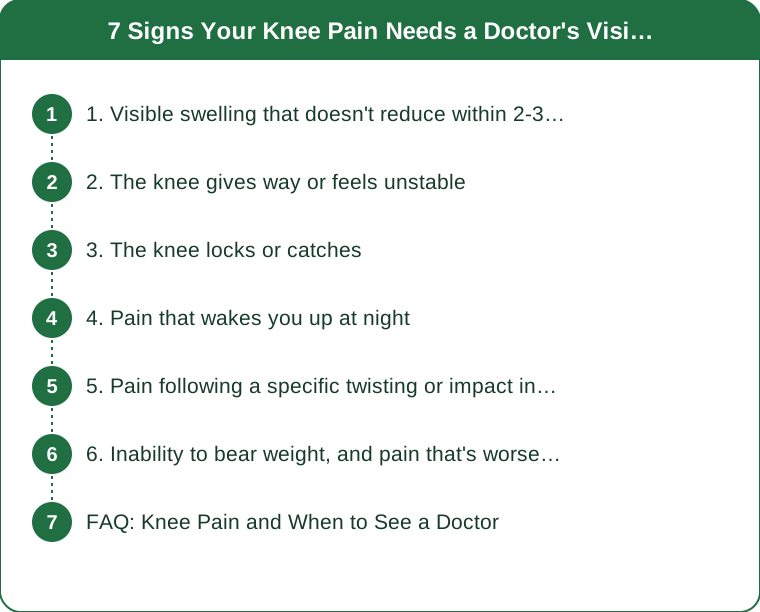
1. Visible swelling that doesn’t reduce within 2-3 days
Mild post-activity puffiness is common and usually resolves quickly with basic rest. Persistent or worsening swelling past 2-3 days suggests ongoing inflammation or fluid buildup that basic home care isn’t resolving on its own, and warrants an actual look.
2. The knee gives way or feels unstable
A sensation of your knee buckling or ‘giving way’ during normal walking or standing, especially if it happens more than once, points to a possible ligament issue that needs assessment — this is meaningfully different from general weakness or soreness.
3. The knee locks or catches
If your knee genuinely gets stuck in a bent position or catches unexpectedly during movement, this can indicate loose cartilage or a meniscus issue physically blocking normal joint movement — not something that resolves with rest alone.

4. Pain that wakes you up at night
Daytime activity-related soreness is common; pain severe enough to disrupt sleep is a different category and often signals more significant inflammation or an issue that needs evaluation rather than continued waiting.
5. Pain following a specific twisting or impact injury
A clear injury moment — a twist, a fall, a direct impact — followed by pain is different from gradual, activity-related soreness with no specific onset. Acute injury mechanisms are more likely to involve structural damage worth imaging.
6. Inability to bear weight, and pain that’s worsening over weeks
Inability to put weight on the leg
If you genuinely cannot bear weight on the knee, or can only do so with significant pain, this is one of the clearer signals to seek care promptly rather than waiting.
Pain that’s progressively worsening over several weeks
Most benign knee soreness plateaus or improves with basic rest within 1-2 weeks. Pain on a clear worsening trajectory past that window, despite rest, suggests the underlying issue isn’t resolving on its own.
FAQ: Knee Pain and When to See a Doctor
Is it worth trying physical therapy before seeing a doctor?
For most non-emergency knee pain, seeing a doctor first for an initial evaluation and possible imaging is the more efficient path, since it can direct what specific PT approach (if any) is actually needed.
Should I stop all exercise if I notice one of these signs?
Generally yes, avoid loading the knee heavily until it’s evaluated — continuing to train through these specific signs risks turning a manageable issue into a more serious one.
Does age change which of these signs matter most?
Swelling and instability warrant attention at any age, though older adults with knee pain and any of these signs are generally advised to seek evaluation sooner given higher rates of underlying joint conditions.
TL;DR:
- Swelling lasting more than 2-3 days is a signal basic rest isn’t resolving the issue
- A knee that gives way, locks, or catches points to a possible structural issue needing assessment
- Night pain and inability to bear weight are stronger red flags than typical activity soreness
- Pain following a specific twisting injury, or a clear worsening trend over weeks, both warrant a visit
Keep Reading
This article is for general informational purposes only and is not medical advice. Always consult a qualified health professional for guidance specific to you.