7 Reasons Your Knee Clicks When You Squat (and What Actually Helps)
Quick Answer: Knee clicking during a squat is usually just gas bubbles releasing in the joint or a tendon sliding over bone - both harmless. It only becomes a concern when the click comes with pain, swelling, or a feeling that the knee is catching or giving way.
You drop into a squat, hear a pop, and freeze mid-rep wondering if you just broke something. Most of the time your knee is fine - it’s just noisy. Here are the 7 real reasons it happens and the 2 signs that actually mean stop and get it checked.

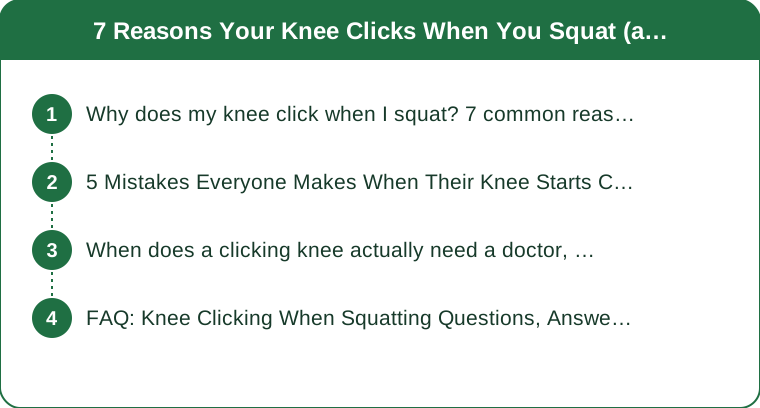
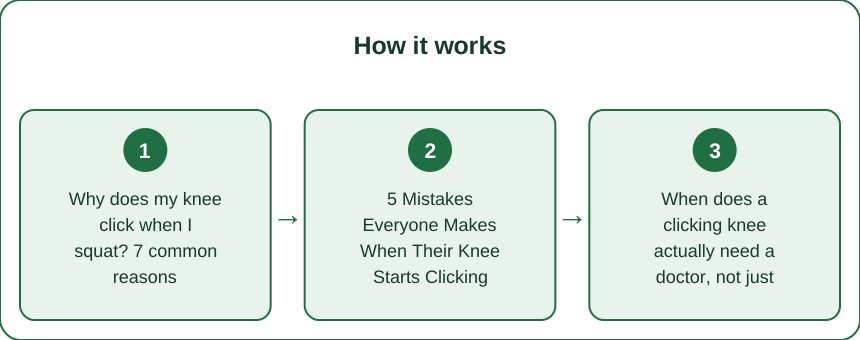
Why does my knee click when I squat? 7 common reasons
1. Gas bubbles in the joint fluid
Your knee is cushioned by synovial fluid, and dropping into a deep squat can shift pressure enough to release tiny gas bubbles - the same mechanism as cracking a knuckle. It’s painless and can’t be forced on command, which is part of why it feels random.
2. A tendon snapping over bone
The IT band or patellar tendon can catch slightly on a bony ridge near the kneecap as the joint bends past 90 degrees, then release with an audible snap. This is more common with prominent knee anatomy and isn’t a sign of damage.
3. Kneecap tracking slightly off-center
If your kneecap doesn’t glide perfectly straight in its groove, it can click as it shifts position during the descent. Weak outer quad muscles are a common contributor, and targeted strengthening often quiets it within a few weeks.
4. Tight quads or hamstrings changing the angle
Tightness in the muscles crossing the knee changes how much tension pulls on the kneecap during a squat, which can create a click at a specific depth every time. A 5-minute pre-squat stretch routine often removes it entirely.
5. Cartilage texture changes with age
Mild, painless roughening of the cartilage surface becomes more common after 30 and can create a soft crackling sound (crepitus) without meaning anything is wrong. This is one of the most common reasons people ask a doctor about clicking, and it usually needs no treatment.
6. Squat depth or foot position
Going deeper than your current hip mobility comfortably allows, or squatting with your feet too narrow, can create clicking that disappears the moment you adjust either variable. Try widening your stance an inch and see if the sound changes.
7. Old, healed minor injury leaving scar tissue
A sprain or bump from months or years ago can leave slightly thickened tissue that catches during specific movements. This type is usually consistent and predictable rather than getting worse over time.
5 Mistakes Everyone Makes When Their Knee Starts Clicking
1. Stopping all squatting entirely out of fear. A painless click isn’t a reason to avoid an exercise that’s otherwise strengthening the joint - that avoidance often weakens the muscles that would have quieted the click in the first place.
2. Assuming louder means worse. Volume has almost no relationship to severity; a loud gas-release pop is harmless while a quiet grinding sensation with pain is the combination worth watching.
3. Googling symptoms and assuming the worst-case result. Search results skew toward rare, serious conditions - the actual odds heavily favor a harmless mechanical cause.
4. Ignoring it when pain is also present. The click itself rarely matters; painless clicking gets ignored correctly, but people also ignore clicking that comes with real pain, which is the combination that needs attention.
5. Changing your squat form based on internet advice instead of a professional look. If the click bothers you enough to change how you move, a physical therapist can actually assess your specific knee instead of guessing from a forum thread.

When does a clicking knee actually need a doctor, not just rest?
Two combinations matter more than the click itself: clicking plus pain, even mild or occasional, and clicking plus a feeling of instability - like the knee might buckle or give way. Either one is worth a physical therapist or sports medicine evaluation, ideally within a week or two rather than waiting to see if it resolves on its own.
Swelling that shows up within a few hours of a clicking episode is another signal worth mentioning to a professional, even if it’s mild. This is general information, not medical advice - a professional needs to see your specific knee to rule anything out with confidence.
FAQ: Knee Clicking When Squatting Questions, Answered
Is it bad if my knee clicks every single time I squat?
Not necessarily. Consistent, painless clicking at the same point in the movement is usually mechanical (a tendon or the kneecap tracking) rather than a sign of ongoing damage.
Can strengthening exercises actually stop the clicking?
Often yes. Clicking related to kneecap tracking or muscle imbalance frequently improves within 4-6 weeks of targeted quad and hip strengthening.
Should I avoid squatting deep if my knee clicks?
Only if the click comes with pain at that depth. Painless clicking at full depth is common and doesn’t mean you need to limit your range.
TL;DR:
- Most knee clicking during squats is gas release, tendon movement, or kneecap tracking - all harmless
- Painless clicking isn’t a reason to stop squatting
- Clicking plus pain or a feeling of instability is the combination that needs a professional look
- Targeted quad and hip strengthening often quiets clicking within weeks
This is general information, not medical advice - see a physical therapist if clicking ever comes with pain or a sense the knee might give way.
Keep Reading
This article is for general informational purposes only and is not medical advice. Always consult a qualified health professional for guidance specific to you.