Why Knee Pain Shows Up on One Side Only — and What It Says About the Other Leg
Quick Answer: One-sided knee pain usually means that knee is absorbing extra load — often because the other leg’s hip or ankle isn’t doing its share. The painful knee is frequently the victim, not the culprit, so check strength and mobility on both sides before blaming the joint that hurts.
Your left knee is fine. Your right knee complains on every stair. Same body, same shoes, same workouts — so why does only one side hurt? That asymmetry is actually a clue, and it points somewhere most people never look.

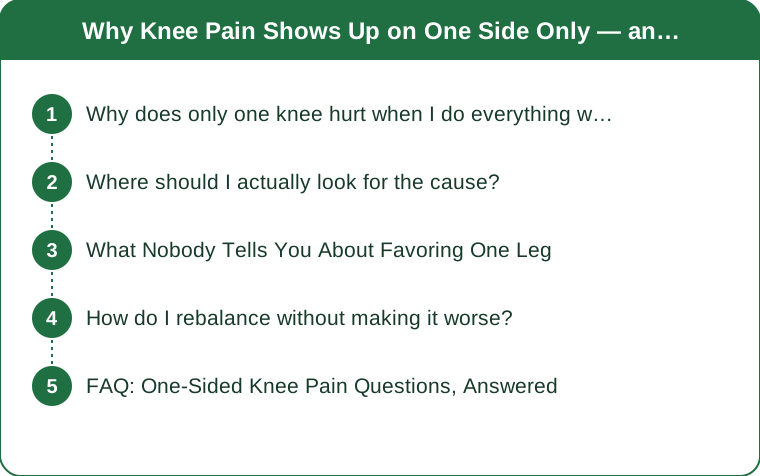
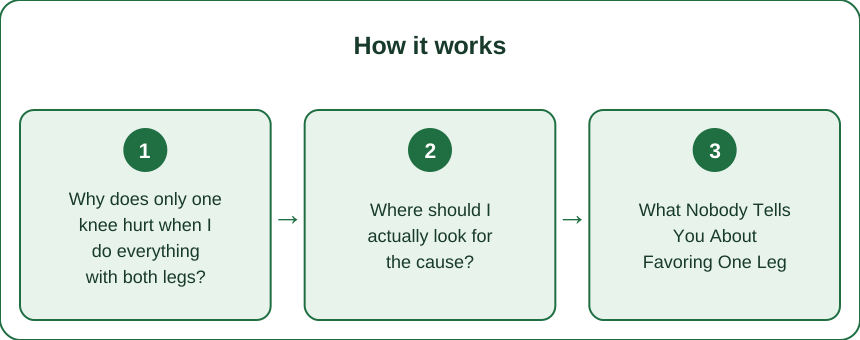
Why does only one knee hurt when I do everything with both legs?
Because your legs don’t actually share work 50/50. Most people unconsciously favor one side — stepping up with the same lead leg, shifting weight to one hip while standing, pushing harder off one foot.
Over months, that adds up: the busier leg’s knee can take thousands of extra loaded reps per week without you noticing. Pain shows up on the side doing overtime, while the real problem — weakness or stiffness elsewhere — hides on the quiet side.
And here’s the part that surprises most people: the fix often starts at a joint that doesn’t hurt at all.
Where should I actually look for the cause?
Work through this checklist — 5 minutes, no equipment:
- Opposite-side glute: Do 10 single-leg glute bridges per side. If the non-painful side shakes or fatigues first, that hip has been slacking and your painful knee has been compensating.
- Same-side ankle: Kneel and lean your knee over your toes. If the painful side’s ankle is stiffer by more than about 2 inches of forward travel, the knee above it twists to make up the difference.
- Single-leg balance: Stand on each leg for 30 seconds, eyes open. A wobblier side means the stabilizers there are off duty.
Asymmetry in any of these is a stronger lead than anything in the knee itself.

What Nobody Tells You About Favoring One Leg
You can’t feel yourself doing it. Favoring is invisible from the inside — your brain files it under ‘normal’ within weeks.
Want proof? Film yourself doing 10 bodyweight squats from the front. Most people with one-sided knee pain will see their hips shift subtly toward the strong side on every rep — a 10-15% load difference they’d swear isn’t happening.
The camera doesn’t negotiate. That 30-second video usually explains more than a month of poking at the sore knee.
How do I rebalance without making it worse?
Go single-leg and start light. Bilateral exercises (regular squats, leg press) let the strong side keep carrying the load, so they won’t fix the gap.
A simple starting block: split squats, single-leg glute bridges, and step-downs — 3 sets of 8 per leg, 2-3 times a week, always starting with the weaker side and matching that rep count on the strong side. Add ankle mobility work daily if the checklist flagged stiffness.
If pain is sharp, swells the joint, or hasn’t budged after 3-4 weeks of consistent rebalancing, stop guessing and see a physical therapist — one-sided pain that resists load management deserves professional eyes. This is general information, not medical advice.
FAQ: One-Sided Knee Pain Questions, Answered
Should I rest the painful knee completely?
Usually no — full rest lets both legs get weaker while the imbalance stays. Reduce the aggravating load, keep pain under a 3/10 during exercise, and rebuild from there. Sharp or swelling pain is the exception: that’s a see-a-professional signal.
Can worn shoes cause one-sided knee pain?
They can contribute. Check your soles — uneven wear (one heel more rounded than the other) both reflects and reinforces a favoring pattern. Replace shoes worn visibly lopsided.
Why does my knee hurt on stairs but not walking?
Stairs load the knee at roughly 3-4x bodyweight versus about 1.5x for flat walking. A compensation pattern that hides at low load shows up when the multiplier jumps.
TL;DR:
- One-sided knee pain usually means that side is doing extra work — the painful knee is often the victim, not the cause
- Check the opposite glute, same-side ankle, and single-leg balance before blaming the joint
- Film 10 squats from the front: the hip shift you can’t feel is visible on camera
- Rebuild with single-leg work (3x8 per leg, weak side first); see a PT if nothing changes in 3-4 weeks
The knee that hurts is telling you where the load went — not where the problem started. This is general information, not medical advice.
Keep Reading
This article is for general informational purposes only and is not medical advice. Always consult a qualified health professional for guidance specific to you.