When Stairs Hurt: Decoding Knee Pain on the Way Up (and Down)
Stairs are the knee’s honesty test — the joint loads at multiples of body weight per step — and the pain that appears there first is usually a message about strength and mechanics, not damage. The stairs-pain decoder: the patterns, the fix-it program and the real red flags.

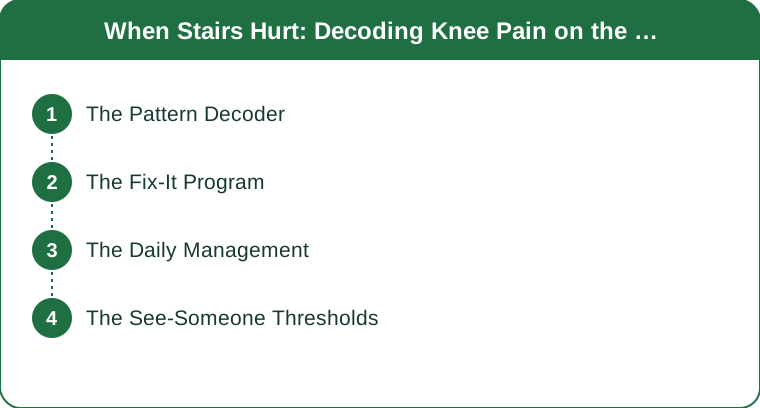
The Pattern Decoder
What the pain’s location and direction say: the front-of-knee classic (the kneecap-area ache worse going DOWN — the patellofemoral pattern; the most common stairs complaint and the most fixable; the kneecap pressed hardest on descent’s braking), the up-versus-down logic (the down-hurts-more pattern pointing to quad-control and load-tolerance — the eccentric strength gap; the up-hurts pattern implicating strength more simply), the inside-and-outside notes (the joint-line pains that deserve assessment sooner — the meniscus-adjacent patterns), and the reassurance baseline (stairs pain in young-and-middle-aged knees is overwhelmingly the strength-and-mechanics story — the ‘wear and tear’ self-diagnosis usually wrong AND self-fulfilling via avoidance; the motion-is-lotion doctrine from the knee chapter).
The Fix-It Program
The strengthening that works: the quad rebuild (the patellofemoral evidence crowning quad strengthening — the wall sits, the step-downs practiced SLOW, the leg-press-or-squat progression; the pain-free range respected per the rehab doctrine), the hip account (the hip abductors-and-glutes controlling how the knee tracks — the side-lying leg raises, the banded side steps, the single-leg balance work; the knee’s problems so often living upstairs), the eccentric emphasis (the slow step-down drill as the stairs rehearsal itself — the three-second lowers that build exactly the descent control stairs demand; the small-step start with height progressing), the calf-and-ankle supporting cast (the heel raises and ankle mobility from the barefoot chapters — the shock absorption below the knee), and the dosing rules (the every-other-day rhythm, the mild-discomfort-that-settles allowance from the tendon doctrine — the pain that eases as you warm being a good sign; the sharp-and-worsening being the regress signal).

The Daily Management
Living with stairs meanwhile: the technique tweaks (the whole-foot placement over the toes-only perch, the handrail used without shame during the rebuild — the lead-with-the-stronger-leg-up, weaker-down pattern for flare days), the don’t-avoid doctrine (the stairs skipped entirely training the knee to tolerate less — the graded exposure that rehab is; the elevator month making the problem worse), the load management (the flare weeks trimming the AGGRAVATORS — the deep squats and downhill runs paused, the flat walking kept; the swap-not-stop rule), the weight-and-footwear notes (the supportive daily shoes during the sensitive phase — the load math honest without moralizing), and the patience calibration (the strengthening fix showing in four-to-eight weeks — the program that feels unrelated to stairs quietly fixing them; the consistency being the medicine).
The See-Someone Thresholds
When it’s not just strength: the mechanical red flags (the locking, the giving-way, the catch that stops movement — the meniscus-and-ligament tier deserving assessment now), the swelling signal (the visibly puffy knee after activity — the joint that swells is reporting; the doctor-or-physio visit), the trauma history (the twist-or-impact onset versus the crept-in kind — the injury-onset pain assessed rather than self-programmed), the night-pain-and-systemic tier (the pain that wakes you, the redness-and-heat — the beyond-mechanical signals from the pain doctrine), the no-progress checkpoint (the six-week honest effort without improvement — the professional eyes that catch what generic programs miss; the physio visit as the shortcut, not the failure), and the encouragement close (the stairs-pain story ending well for most — the strengthened knee that climbs quietly again; the joint that asked for strength and got it). Decode the direction, strengthen quads-and-hips, keep climbing gently: the stairs, reclaimed.
Front-knee pain worse going down is the fixable classic — slow step-downs, wall sits and hip work for six weeks fix most cases. Locking, swelling or giving-way see a professional now.
Keep Reading
This article is for general informational purposes only and is not medical advice. Always consult a qualified health professional for guidance specific to you.