Why Your Knees Cave In During Squats (and How to Actually Fix It)
Knees caving inward during a squat, known as knee valgus, gets blamed on weak knees, but the knee itself is rarely the actual problem. The real cause usually sits above or below the joint, in the hips or ankles, which is why cueing ‘push your knees out’ only ever works halfway.

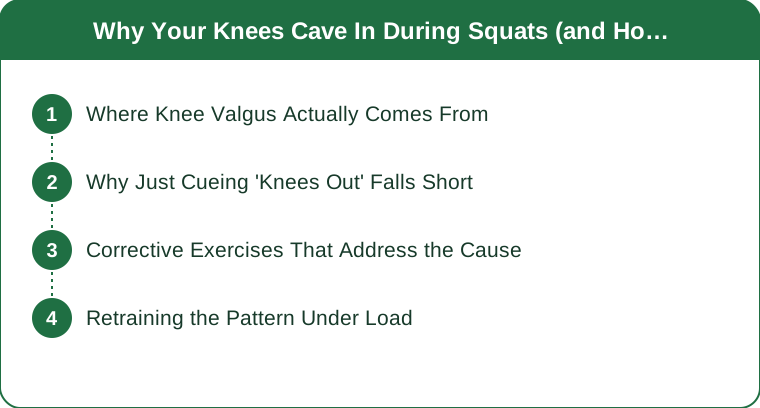
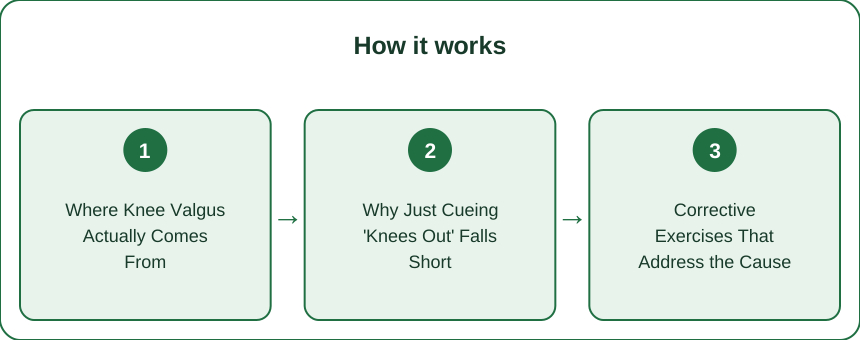
Where Knee Valgus Actually Comes From
The root causes: the the-hip-abductor-weakness (weak hip abductor and external rotator muscles failing to control the thigh bone’s rotation during the squat’s descent, letting the knee drift inward), the the-ankle-mobility-restriction (limited ankle dorsiflexion mobility forcing the knee to compensate by rotating inward to achieve squat depth the ankle can’t otherwise support), the the-foot-arch-collapse-contribution (the foot’s arch collapsing inward during the squat, which pulls the whole lower leg chain, including the knee, into a valgus position).
Why Just Cueing ‘Knees Out’ Falls Short
The limitation: the the-cue-without-capacity-mismatch (telling someone to push their knees out doing nothing if the hip muscles lack the strength to actually execute that correction under load), the the-temporary-fix-only (a verbal cue sometimes working temporarily through conscious effort, only for the pattern to return once fatigue or heavier load removes that conscious control), the the-mobility-ignored-if-cue-only (a cue-only approach doing nothing to address an underlying ankle mobility restriction, which will keep forcing the same compensation regardless of cueing).

Corrective Exercises That Address the Cause
The fixes: the the-banded-lateral-walks (banded lateral walks and clamshells specifically targeting the hip abductor weakness that allows the thigh to rotate inward under load), the the-ankle-dorsiflexion-drills (ankle mobility drills, such as knee-to-wall stretches, addressing a restricted ankle range that’s forcing the knee to compensate), the the-single-leg-stability-work (single-leg exercises like step-downs building the unilateral hip control that a double-leg squat can sometimes mask even when one side is weaker).
Retraining the Pattern Under Load
The progression: the the-bodyweight-first-correction (correcting the pattern in bodyweight squats before reintroducing any external load, since adding weight to a faulty pattern only reinforces it), the the-tempo-slowdown-technique (slowing the descent of the squat to give more time to consciously monitor and correct knee position before speed removes that control), and the frame (knee valgus during squats usually traces back to weak hip abductors or restricted ankle mobility, not a knee problem itself — targeted corrective exercises fix the root cause in a way cueing alone cannot.)
Knee valgus during a squat looks like a knee issue because that’s where the visible collapse happens, but the actual mechanical fault almost always originates elsewhere: weak hip abductors that can’t control thigh rotation, or restricted ankle mobility that forces the knee to compensate to reach squat depth. That’s why the common cue to simply push the knees out during a squat only ever provides a partial, temporary fix — it asks for a correction the hips may not have the strength to execute once fatigue sets in or load increases. Targeted work like banded lateral walks and clamshells for the hips, combined with ankle dorsiflexion drills like knee-to-wall stretches, addresses the actual mechanical limitation rather than just the symptom. Correcting the pattern in bodyweight squats first, with a slower descent tempo to allow conscious monitoring, builds the pattern properly before reintroducing external load that would otherwise reinforce the same compensation.
Keep Reading
This article is for general informational purposes only and is not medical advice. Always consult a qualified health professional for guidance specific to you.